Blueprint
  • WHO WE ARE
    • Our Approach
    • Our History
    • Commitment to Equity
    • Board of Directors
    • Team
    • Contact Us
  • WHAT WE DO
    • Our Services
    • Our Projects
    • Our Impact
    • Our Blog
    • Our Financing Options
  • WORK WITH US
    • School Partners
    • Philanthropic Partners
    • Internship Program
    • Careers
  • WHERE WE ARE
    • California
    • Washington
    • Texas
    • Colorado
Blueprint
  • Skip to primary navigation
  • Skip to main content
Blueprint

Blueprint

Expanding educational opportunities for students in under-resourced communities

  • WHO WE ARE
    • Our Approach
    • Our History
    • Commitment to Equity
    • Board of Directors
    • Team
    • Contact Us
  • WHAT WE DO
    • Our Services
    • Our Projects
    • Our Impact
    • Our Blog
    • Our Financing Options
  • WORK WITH US
    • School Partners
    • Philanthropic Partners
    • Internship Program
    • Careers
  • WHERE WE ARE
    • California
    • Washington
    • Texas
    • Colorado

internships

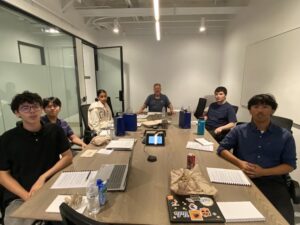
Intern Takeover – Week 1

July 31, 2026 by PCSD

The past week has been filled with several opportunities that help us interns further enrich our future. We have gotten to meet and network with several industry professionals that are all needed in real estate development like bankers, project managers, real estate developers, and more!  

After a morning of getting comfortable in a new work environment, tours, and introductions, Day 1 popped off with lunch and learn with an insurance broker, Greg Martin, who works with High Ground Insurance Inc. Greg taught us what insurance is, the process of getting insurance, and the different types of insurance. Greg also talked about his journey into insurance and showed us that life isn’t always a linear path.  

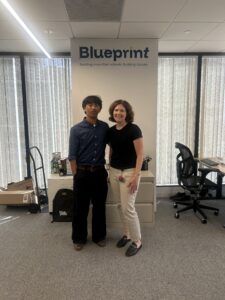
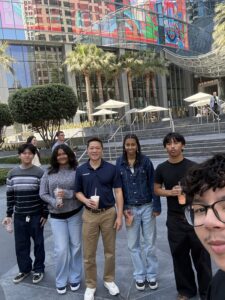
On Day 2, we were in for a session of Blueprint 101! The day started off with us getting to meet the amazing CEO of Blueprint, John Sun. Instead of a regular sit and talk, John took us interns for a walk through Downtown LA, where he generously treated us to boba at 85 Degree Baker! While we were walking, John told us about his story as a son of Taiwanese immigrant parents, growing up in the US, and eventually how he became the CEO of Blueprint. Furthermore, he informed us about Blueprint’s inspiring history and mission to expand opportunities for education and further enhancing communities.  

When we returned to the office, we met with the great Akil Manley, who is the Regional Director of the Southern California region of Blueprint. Akil talked to us about how Blueprint chooses the projects that they support and told us about the ins and outs of project management. We learned a lot about zoning, cost, affordability, laws, permits, location, etc. We also learned about the difficult aspects of working on real estate projects. For example, having hard and realistic conversations with clients, keeping them levelheaded, and making sure that a company is still gaining from a project.  

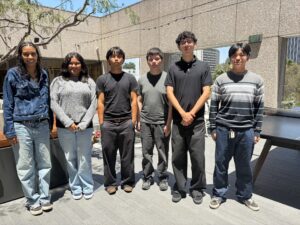
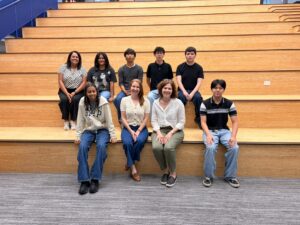
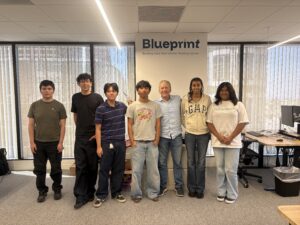
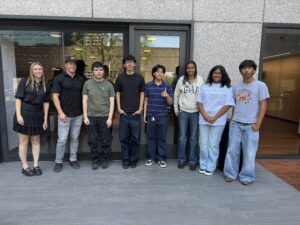
After our talk with Akil and John, we ended up having lunch with the rest of the lovely Blueprint team. There, we met with people like Kahlmus Eatman, April Cang, Tina Lin, and more! We had the opportunity to talk to the whole team, who were all very enthusiastic to meet with us. We talked about ourselves, our goals, hobbies, interests, and really just got to know each other. After a delicious lunch, we ended it with an amazing group shot at the outside space of our office. However, the day wasn’t yet over as April Cang treated us to a tour of the tallest building in LA, right across the street! We got to see an amazing view of LA, that none of us interns have seen. In all honesty, it was breathtaking. 

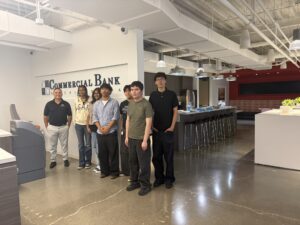
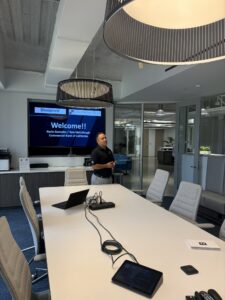
On Day 3, we took a little trip to the 10th floor of our building to meet with the Commercial Bank of California. There, we met with Senior Vice President and Regional Manager, Kevin Gonzalez, and Executive Vice President, Tom McCullough. There, we got a financial literacy course and learned a lot about credit, savings accounts, loans, and so much more.  

This introduced us to a lot of important information about financing that many won’t get until later in life, or even at all; which allows us to get a headstart in making sure we make financial smart decisions to set us up for success in the future.  

Day 4 was a pretty busy day for us interns. On Day 4, we met with April Komolmis, Marce Garcia, Victoria Valle, and Robert Arredondo. April and Marce are from Ednovate Charter Schools, whereas Victoria and Robert are from CLA (CliftonLarsonAllen LLP) and are auditors from that firm.  

Firstly, April and Marce gave us a tour of one of their high schools located in Echo Park, Brio College Prep. They talked to us about Ednovate’s mission and showed us the innovated layout of Brio. They also talked a little bit about the construction process of the school. However, we did get an inside scoop of the construction process of Brio from Sherise Henderson, who was the project manager of Brio, prior to our visit.  

After we came back from our tour at Brio, we talked to Victoria and Robert, who taught us about the world of finance and auditing. Most of us interns didn’t have much prior knowledge about auditing. However, Victoria and Robert opened our eyes to the possibilities of auditing and finance. They enthusiastically explained to us how to get into auditing and what auditing is. 

Day 4 was the day we were outside the most and honestly was a day that I personally really enjoyed. On this day, we had the pleasure of meeting with Gary Blackwell, the owner of EPI Construction, Blackwell Construction, and Blackwell Development. We also met with Eric Lieu, a project manager at EPI.  

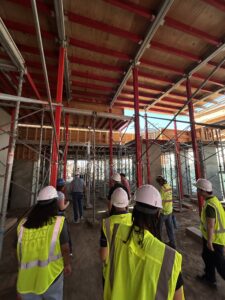
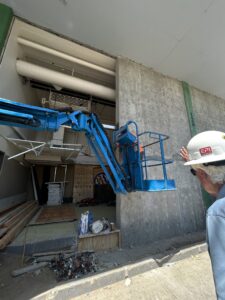
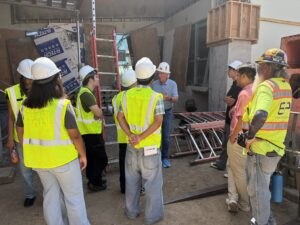
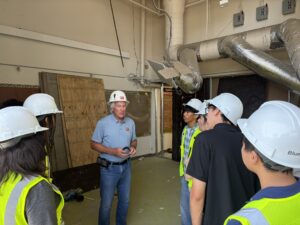
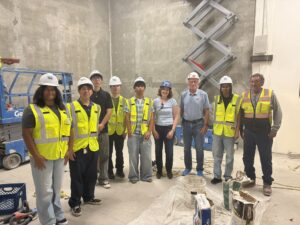
First, we met at Alliance Collins Family College-Ready High School, which was a renovation project. After putting on our vests and hard hats, Gary gave us a small tour of what they were working on. We go to see a lot of the structural and base layers of the project. After the small tour, we had the chance to talk to Gary, Eric, and the superintendent of the project, “Tarzan”, about project management and construction work. 

After our chat, we headed to our next site which was seismic retrofitting (making the building more structurally adept to earthquakes) at KIPP Endeavors. Here, we got a tour of the school and went to see how seismic retrofitting is done. In this case, they had to build a continuous cement wall with a rebar inside it from top to bottom.  

Though meeting and talking to Gary and Eric was a pleasure, it was also very inspiring to see so many hardworking immigrant men working on both sites, ensuring a safe environment for future generations to have a place that fosters exceptional education. As someone who is an immigrant and has immigrant parents, and a dad who worked in construction, this was very uplifting to see. It was also touching to see that most of these workers have been with Gary for 20 plus years, which is just a true testament to how much Gary cares for his employees. In fact, I got the chance to talk to the superintendent of this site, who talked about his story in construction as an immigrant from Central America and how EPI has done amazing things for him.  

In all, the first week of the Blueprint summer internship has been a blast! It has really inspired us interns to do the best we can and has shined light on many career paths we didn’t know were possible, and for me personally; this experience has made me look at the world around me differently. From the skyscrapers I see in Downtown LA, to the charter schools I see in my neighborhood, it all connects to what I have learned in the first week of the Blueprint internship. 

I want to give a big thank you to the Blueprint team, all the professionals that met with us this past week, and a huge thank you to the amazing Michele Wray Khateri for organizing everything and making our first week interning so much more memorable. 

Day 1
 

Day 2
 

Day 3
Day 4
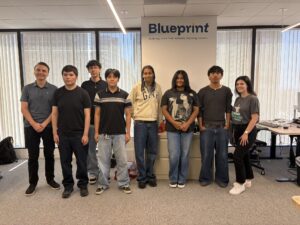
Day 5
 

Filed Under: Blog Tagged With: internships

Exploring Real Estate Through People and Property

July 31, 2026 by PCSD

Who did you meet with today?

Today I met with different people connected to the real estate and construction world: UCLA professor Eric Sussman, Nick Bundra and Sydney Landry from Cal Geo, and Joe Wilson from Blueprint and Cecilia Melgares from the Equitas School project.

Where do they work? What does the company do?

Eric Sussman is a managing partner at a real estate investment firm that owns apartment communities across six states, and he also teaches at UCLA and works as a paid expert witness for court cases. Nick and Sydney work with Cal Geo, an association representing geotechnical engineers, who are responsible for testing soil and foundation stability to make sure buildings don’t sink or shift. Joe works at Blueprint, and Cecilia works at Equitas and talked about the school project, which involved converting a former armored vehicle facility into a functioning school.

What did you learn today? What were some highlights?

I learned a lot about the different ways people take to get into real estate and construction, and how big the industry really is. From Eric, I learned that college isn’t necessary for everyone to build a successful career. Trades like plumbing, roofing, and electrical work are completely valid paths, and that online resources like books, AI, YouTube, and articles can teach you a generous amount if you’re willing to use them. He also shared that he got laid off from his first job out of business school for whistleblowing on fraud, which pushed him to start his own real estate firm and eventually became a UCLA professor. That is a reminder that bad things happening can redirect you toward something better. From Nick and Sydney, I learned how associations like CalGeo work: they can’t set prices as a group due to antitrust laws, so instead their value comes from networking and showing the importance of the profession. My highlight was hearing how geotechnical engineers must sign off on hospitals and schools specifically because public safety is at stake. From Joe and Cecilia, the important take was knowing how community pushback like protests, appeals, and unprofessional or slow inspectors can seriously delay a project, even when there’s a hard deadline like a school opening day that hundreds of families are counting on.

What insights did you gain into the field of real estate development?

Real estate development is far more layered than just buying land and building. It involves legal risk, public safety, community relations, and constant problem-solving under pressure. Eric’s experience showed me that the business side such as finance, accounting, and ethics is just as central to real estate as the physical construction, and that expertise in the field can open doors like consulting and expert witness work. Nick and Sydney’s insights showed me that behind every project there’s a whole ecosystem of specialized engineers and associations working to protect public safety, and that staying open-minded to new evidence and differing opinions is essential. You can’t be defensive about your own ideas if you want to get things right. Joe and Cecilia’s experience with the Equitas School project highlighted just how many outside forces like neighbors, inspectors, city permitting, even COVID-related slowdowns can affect a project’s timeline, and how developers have to manage people and politics just as much as physical building

What did you find the most interesting about the field after today?

What impressed me was how human the field of real estate development actually is. Geotechnical engineering, for example, is essentially AI-proof because every site has unique soil conditions, seismic risks, and environmental factors that require real judgment and adaptability. Similarly, the Equitas School story showed that even with strict deadlines and safety requirements like making sure no leftover diesel tanks or chemical hazards could harm children. The biggest obstacles often come from people such as protesting neighbors, slow inspectors, and remote city staff during COVID rather than the engineering itself. It made me realize that success in this field depends just as much on patience, communication, and resilience as it does on technical skill.

Photos: Christian Acevedo, Summer Intern 2026

Speaking with UCLA Professor Eric Sussman
Spoke with CalGeo Executive Director and Director of Communications, Marketing, and student development
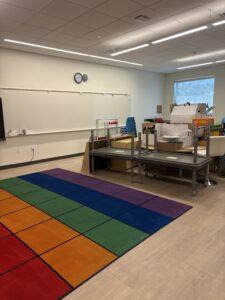
Inside a classroom of Equitas
Spoke with PM Joe Wilson and Managing Director of Operation of Equitas

Filed Under: Blog Tagged With: internships

Sell Me This Pen: Real Estate Edition

July 31, 2026 by PCSD

Who did you meet with today? 

On our final blog day, we met with 3 people from the City National Bank. These include Dena Harte (SVP, Commercial Banking), Simon Wu (VP & Credit Solutions), and Skylar Tsimmerman (Credit Analyst II). All these people and their teams work together to approve loans for commercial lending. These people play pivotal roles in the real estate industry. They analyze if a property is going to be profitable and is going to be able to pay back their loans.

Where do they work? What does the company do? 

Dena Harte, Simon Wu, and Skylar Tsimmerman work for City National Bank. City National Bank provides financial services to personal, private, or commercial clients.  They offer a variety of services such as Wealth Management or Treasury Management. Today we had an emphasis on Loans & Credit, especially for Commercial and Real Estate.

What did you learn today? What were some highlights? 

Today we learned about the bank’s perspective of when a business asks for a loan for a property. The method of analysis is different for each business. For example, if the business is industrial, then the bank looks at if the property is already situated in an industrial part of a city and if it is near areas with transportation infrastructure such as an airport, or nearby freeways. A highlight is the bank’s consideration of whether a building can be repurposed after the business tenant leaves. An example of this would be gas stations, because gas stations have gas tanks underground. That means that the plot of land would be a lot harder to repurpose into another building later on.

What insights did you gain into the field of real estate development?  

The insights I’ve gained about this field of real estate development is that it is the key to everything. When you don’t have sufficient funds, you can’t build. It is important to be able to sell your idea to the bank and be able to answer the bank’s questions about your business. “Is this business profitable?”, or “Does this property have other tenants that compete with your business?”.  Ultimately, banks want your business to succeed. If you are successful, that means your bank is getting the money on your loan.

What did you find the most interesting about the field in the field after today? 

The most interesting thing about the field is the consideration of ethics. You don’t want to be that one bank who closes schools. It gives the bank a bad reputation, and banks must consider that while lending. If public goodwill is lost, then clients might retaliate against the bank and it would be huge issue.

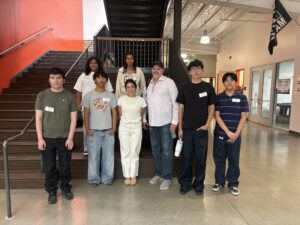
Group Photo with Simon Wu (VP & Credit Solutions – CRE at City National Bank) and Skylar Tsimmerman (Credit Analyst II at City National Bank)

Filed Under: Blog Tagged With: internships

Architects and the Steps Needed to Build Structures​

July 31, 2026 by PCSD

Who did you meet with today? 

We met with the owner Richard Berliner, as well as the other architects like Lautaro Galvez, Jules Renaud, Tannaz Mohtasebi, Scott Nusinow, Kai Telles, and Patty Canjura, and Sara Vadgama.

Where do they work? What does the company do? 

They work in Culver City in an office. This company is filled with architects that help make models for schools and houses. They also help build them and design the layout for whatever the company that hires them wants.

What did you learn today? What are some highlights? 

I learned about the long process of being an architect as well as when building a project, how many things you must account for. Like one of the things, you must account for the project is the soil, the layout, and the interior design as well. One of the highlights is the amount of projects Berliner has helped bring to life. The number of schools and even right now they are working on rebuilding a house.  So, it was cool to see the original drawings of that and the layouts on the computer.

What insights did you gain into the field of real estate development?  

Some insights I gained into this field are that real estate development has so many steps before actually following through with the actual building. From checking out the site, building the layout, to making sure the soil is good to build on, and there’s no gas tanks or anything potentially dangerous underground. I also found out that building something is a long project and not an easy task at all. There are so many factors that you have to take into account, especially when it comes to the team you decide to have around when building something.

What did you find the most interesting about the field in the field after today? 

What I found the most interesting is that not only do you have to be licensed as an architect, but you also have to renew that license every few years. I thought once you become licensed, that’s all you would have to do, and you can continue with your career.

Photos: Adrian Destura, Summer Intern 2026

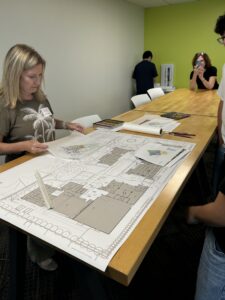
Interns getting introduced to architect plans
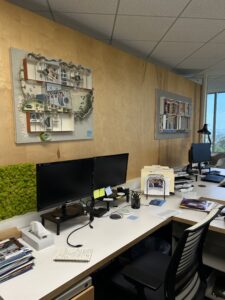
Berliner’s new office space
More architect plans!
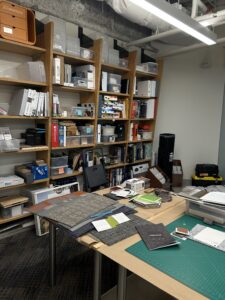
Interior design workspace
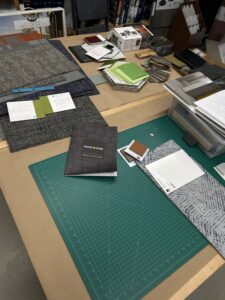
Berliner material space
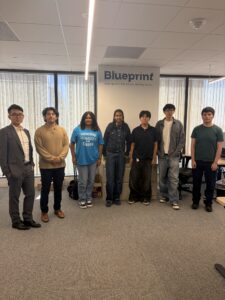
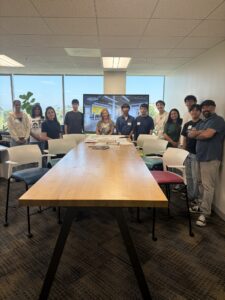
Group shot with Berliner team


Filed Under: Blog Tagged With: internships

Exploring Charter School Finance and Law

July 30, 2026 by PCSD

Who did you meet with today? 

Today I met with two people: Mera Baker Ramos, General Counsel at Blueprint, and Robert Nickell, an investment banker at HJ Sims, and Tina Lin, VP, Finance at Blueprint. It was a great chance to see very different backgrounds in one day.

Where do they work? What does the company do? 

Mera works at Blueprint, where she serves as General counsel, handling legal compliance and contract negotiations for the company. Robert works at HJ Sims, an investment bank that helps charter schools raise capital through municipal bonds to fund construction and expansion projects. And Tina works at Blueprint, helping schools find financing solutions for their charter school facility projects.

What did you learn today? What were some highlights? 

One of the biggest highlights was learning how varied a legal career can actually be. Mera explained that her path wasn’t linear at all. She started out as a 9th grade Algebra 1 teacher before eventually moving into criminal law and then real estate law, which showed me that people don’t need to have their whole career figured out from day one. She also broke down the process of becoming a lawyer: four years of college in any major, then take the LSAT, law school, and finally the bar exam, which she described as an intense two-month process of studying several hours per day, five to six days a week. With Robert, I learned about how municipal bonds work to finance charter schools. How a school leader comes to HJ Sims, HJ Sims finds investors and structures a deal, a public authority issues the bonds, a bond trustee manages the funds, and eventually the school gets built. He also mentioned two licenses, the SIE and the CFA, that students can actually start working toward while still in college, before eventually moving into entering the workforce.

What insights did you gain into the field of real estate development?  

Today really gave a clear picture of how many moving pieces have to come together behind the scenes before a single building gets constructed. On the legal side, Mera’s work shows that real estate development isn’t just about buying land and building. It requires constant attention to compliance, contracts, and potential legal risks, and lawyers like her need to act by catching problems before they happen to prevent them. On the financial side, Robert’s work showed me that big projects like schools are built with serious groundwork in financing. Someone has to present the proposal convincingly, identify risks early, and match the right investors to the right opportunity. I also learned about the importance of location financially; for example, California schools tend to have more funding per student and stronger government-backed financial support compared to other states, which directly affects these deals gets structured. 

What did you find the most interesting about the field in the field after today? 

What stood out to me was how much trust and storytelling ability required in a field that seems on the outside could be pure numbers and contracts. Robert explained that as an investment banker, part of his job is convincing school leaders to trust him, not just through pricing or results, but by establishing himself as a credible, trusted leader in the industry. Similarly, Mera emphasized how important networking is for building a legal career, since many opportunities come from relationships built at events rather than just applications. It was interesting to see that even in a field built on legal documents and financial structures, human relationships and personal reputation end up being just as important as technical expertise.

Photos: Naomi Deres, Summer Intern 2026

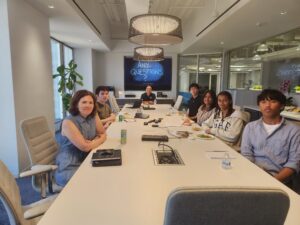
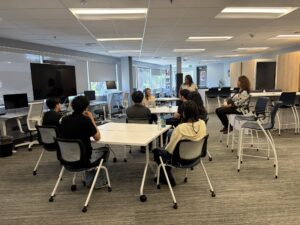
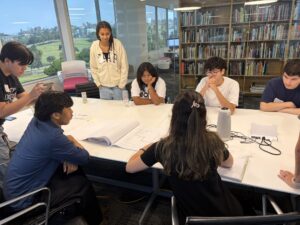
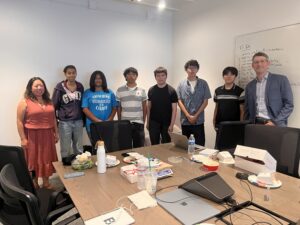
Picture after a presentation by Rob Nickell about finance and bonds
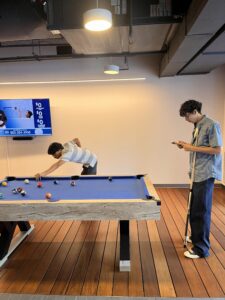
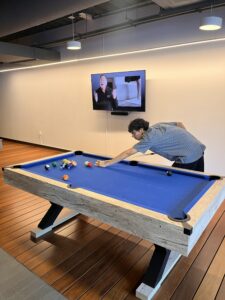
Students wind down and play pool, during a 15 minute break
Pool game intensifies a little as time goes on

Filed Under: Blog Tagged With: internships

Behind The Walls of Our Everyday Buildings

July 29, 2026 by PCSD

Who did you meet with today?

Today I met with Gary Blackwell, the owner of EPI Construction, Blackwell Construction, and BDI (Blackwell Development Inc.)s well as Eric Lieu and Rudolpho. Eric Lieu is a project manager and oversees multiple projects at EPI. Rudolpho is a superintendent at EPI and oversees the work site. We got to visit two active sites at Alliance Collins Family College-Ready High School (Renovation Project) and KIPP Endeavor (Seismic Compliance Project)

Where do they work? What does the company do?

The people I met today work for EPI Construction. The company serves as a general contractor to ensure that projects (such as a new school) get completed on time and within budget. They ensure the safety of people on site and ensure that a construction project meets safety guidelines and the final vision that the owner and architect have.

What did you learn today? What were some highlights?

Today I learned about how a construction project gets completed from start to finish and how each project can be different. The project at Alliance Collins Family College-Ready High School ran into issues when an Alta survey was not performed. This caused delays and more money that had to be spent on the project. A big challenge in the industry is trying to keep the people on-site hydrated. I also learned that general contractors have to bid on projects. Their biggest difficulties can be working with utilities such as water, gas, and electricity. A highlight was definitely the importance of safety in construction. The superintendent serves as a head of safety and at EPI they have weekly safety meetings.

What insights did you gain into the field of real estate development?

Some insights I gained into this field is that General Contractors coordinate with other people and companies to work on a single project, and this can be a difficult process. Some people will disagree and it is up to the General Contractor to be able to resolve conflicts and to keep their promise of delivering a project on time. If a General Contractor can’t resolve issues in time, the project may face delays or go overbudget. They are an extremely essential part of turning a blueprint into the real deal.

What did you find the most interesting about the field in the field after today?

The most interesting thing about the field is that it ties in with the insurance field that was covered in Day 1 (Read that article here!).  Gary Blackwell shared how Bond Insurance guarantees that a project will be completed by a certain time and an amount of cash is set aside. He shared that this means that if he fails to meet time and cash demands, his house, car, and other assets are at risk. It is so interesting how many different industries work together during a construction project when from the outside it is foreman and machinery working.  It was truly eye-opening to be able to piece the puzzle pieces together and see how everything connects.

Photos: Adrian Destura, Summer Intern 2026

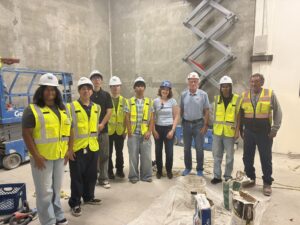
Group shot with the Blueprint team and the EPI team @ KIPP Endeavour
Construction site of Alliance Collins Family College- Ready High School
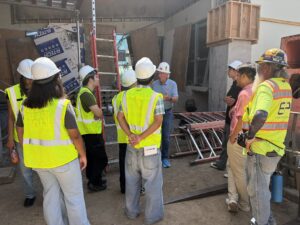
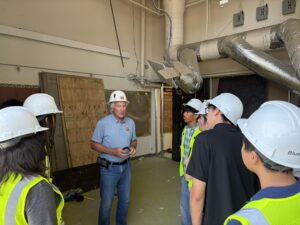
Gary Blackwell explaining the ins and outs of construction and developing property.
Gary talking to us interns about seismic retrofitting
Seismic retrofitting in action @ Kipp Endeavour

Filed Under: Blog Tagged With: internships

  • Page 1
  • Page 2
  • Page 3
  • Interim pages omitted …
  • Page 12
  • Go to Next Page »

Copyright © 2026 · PCSD 2022 on Genesis Framework · WordPress · Log in

Blueprint

Blueprint's mission is to dismantle systemic inequality in education by expanding educational opportunities for students in under-resourced communities.

Contact Us

info@blueprintfutures.org
(213) 542-4700 (office)
(213) 542-4701 (fax)

Quick Links

Who We Are
Work With Us
What We Do

Our Projects
Contact Us

Newsletter

This field is for validation purposes and should be left unchanged.

Regions

Southern California (Main Office)
915 Wilshire Blvd, Ste 700
Los Angeles, CA 90017

Northern California
66 Franklin St, Ste 300
Oakland, CA 94607

Washington
1201 2nd Ave, Ste 900
Seattle, WA 98101

Texas
2700 Post Oak Blvd, Ste 2100
Houston, TX 77056

Colorado
4600 South Syracuse St, Ste 900
Denver, CO 80237

© Copyright 2026 Blueprint. All Rights Reserved.

Privacy Policy

Blueprint
  • WHO WE ARE
    • Our Approach
    • Our History
    • Commitment to Equity
    • Board of Directors
    • Team
    • Contact Us
  • WHAT WE DO
    • Our Services
    • Our Projects
    • Our Impact
    • Our Blog
    • Our Financing Options
  • WORK WITH US
    • School Partners
    • Philanthropic Partners
    • Internship Program
    • Careers
  • WHERE WE ARE
    • California
    • Washington
    • Texas
    • Colorado
  • This field is for validation purposes and should be left unchanged.