Who did you meet with today?
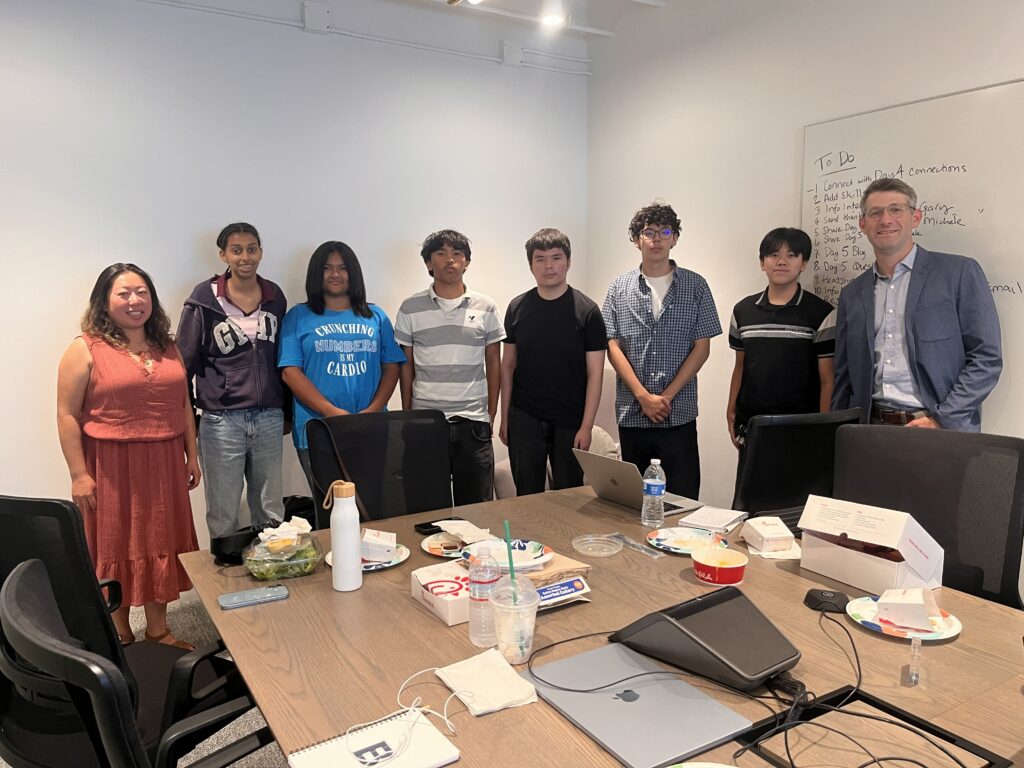
Today I met with two people: Mera Baker Ramos, General Counsel at Blueprint, and Robert Nickell, an investment banker at HJ Sims, and Tina Lin, VP, Finance at Blueprint. It was a great chance to see very different backgrounds in one day.
Where do they work? What does the company do?
Mera works at Blueprint, where she serves as General counsel, handling legal compliance and contract negotiations for the company. Robert works at HJ Sims, an investment bank that helps charter schools raise capital through municipal bonds to fund construction and expansion projects. And Tina works at Blueprint, helping schools find financing solutions for their charter school facility projects.
What did you learn today? What were some highlights?
One of the biggest highlights was learning how varied a legal career can actually be. Mera explained that her path wasn’t linear at all. She started out as a 9th grade Algebra 1 teacher before eventually moving into criminal law and then real estate law, which showed me that people don’t need to have their whole career figured out from day one. She also broke down the process of becoming a lawyer: four years of college in any major, then take the LSAT, law school, and finally the bar exam, which she described as an intense two-month process of studying several hours per day, five to six days a week. With Robert, I learned about how municipal bonds work to finance charter schools. How a school leader comes to HJ Sims, HJ Sims finds investors and structures a deal, a public authority issues the bonds, a bond trustee manages the funds, and eventually the school gets built. He also mentioned two licenses, the SIE and the CFA, that students can actually start working toward while still in college, before eventually moving into entering the workforce.
What insights did you gain into the field of real estate development?
Today really gave a clear picture of how many moving pieces have to come together behind the scenes before a single building gets constructed. On the legal side, Mera’s work shows that real estate development isn’t just about buying land and building. It requires constant attention to compliance, contracts, and potential legal risks, and lawyers like her need to act by catching problems before they happen to prevent them. On the financial side, Robert’s work showed me that big projects like schools are built with serious groundwork in financing. Someone has to present the proposal convincingly, identify risks early, and match the right investors to the right opportunity. I also learned about the importance of location financially; for example, California schools tend to have more funding per student and stronger government-backed financial support compared to other states, which directly affects these deals gets structured.
What did you find the most interesting about the field in the field after today?
What stood out to me was how much trust and storytelling ability required in a field that seems on the outside could be pure numbers and contracts. Robert explained that as an investment banker, part of his job is convincing school leaders to trust him, not just through pricing or results, but by establishing himself as a credible, trusted leader in the industry. Similarly, Mera emphasized how important networking is for building a legal career, since many opportunities come from relationships built at events rather than just applications. It was interesting to see that even in a field built on legal documents and financial structures, human relationships and personal reputation end up being just as important as technical expertise.
Photos: Naomi Deres, Summer Intern 2026