
Blueprint
  • WHO WE ARE
    • Our Approach
    • Our History
    • Commitment to Equity
    • Board of Directors
    • Team
    • Contact Us
  • WHAT WE DO
    • Our Services
    • Our Projects
    • Our Impact
    • Our Blog
    • Our Financing Options
  • WORK WITH US
    • School Partners
    • Philanthropic Partners
    • Internship Program
    • Careers
  • WHERE WE ARE
    • California
    • Washington
    • Texas
    • Colorado
Blueprint
  • Skip to primary navigation
  • Skip to main content
Blueprint

Blueprint

Expanding educational opportunities for students in under-resourced communities

  • WHO WE ARE
    • Our Approach
    • Our History
    • Commitment to Equity
    • Board of Directors
    • Team
    • Contact Us
  • WHAT WE DO
    • Our Services
    • Our Projects
    • Our Impact
    • Our Blog
    • Our Financing Options
  • WORK WITH US
    • School Partners
    • Philanthropic Partners
    • Internship Program
    • Careers
  • WHERE WE ARE
    • California
    • Washington
    • Texas
    • Colorado

Blog

Women of PCSD

March 7, 2022 by Dean Purvis

For Women’s History Month in March 2022, PCSD is proud to highlight the many extraordinary women who guide our charter school partners through the complex facilities development process, leading and driving the work so our partners can stay focused on what matters most – teaching and learning.

Sherise Henderson, Project Manager, Southern California

Deniz Ilgen, Senior Project Manager, Southern California

Tina Lin, Director of Finance

Mary Grace Houlihan, Project Director, Northern California

Mera Baker Ramos, General Counsel

Anna Johnson, Senior Project Manager, Washington
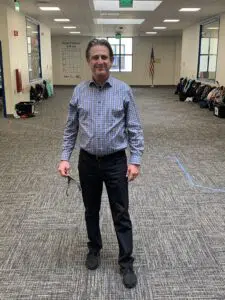
Hope Fang, Director of Finance

Anna Olsen, Senior Project Manager, Northern California

Filed Under: Blog

Interview with Kevin Sved: Navigator Schools

February 3, 2022 by Dean Purvis

After a successful delivery of our first project with Navigator Schools at Watsonville, we took the time to follow up with Kevin Sved, CEO, to talk about Navigator Schools and the new facility.

We are super grateful for the partnership and support from PCSD and we can see the impact our new facility is having on our students in Watsonville. It has really brought us together in a very positive way.

How did you get started with Navigator Schools?
I joined Navigator Public Schools as their CEO about 5 ½ years ago. I was intrigued by their success and the rigor and joy that I saw in the classrooms when I visited. I was impressed with their board and their commitment to the principals and support staff.

I understand that there are three schools within Navigator. What makes each of them unique?
All three Navigator schools (Watsonville, Hollister, and Gilroy) are very tight in terms of their academic model. Each charter school is unique in terms of their relationships with the families and communities and the way they celebrate success.

Watsonville Prep has the highest percentage of students coming from families who are low income and where the home language is Spanish. So, we have additional services to support the students by offering counseling and after school intervention.

Watsonville Prep is also our only privately owned campus. It has interior hallways and has a different sense of community. Our other campuses consist of modulars on district sites.

Can you tell me more about the previous district location for the Watsonville site?
It was very challenging to be on the district site. The school was split on two sites with K-2 on one site and grades 3-4 on another. They were about one mile apart and, often times, it felt like the distance was even greater. Our community, administration, special ed teams were stretched and it made it difficult to respond to students in the way we would have liked to.

What made you decide to work with PCSD?
PCSD has a great reputation and we have always had a positive experience from them. We first started working with PCSD when we were applying for Prop 51 funding when our Gilroy campus was going to be displaced by the high-speed rail. We didn’t end up getting the funding but we were impressed with PCSD and their staff from the project managers to the finance team.

We continued to receive a high level of trust and support from James Heugas with our Watsonville location and Jennifer Afdahl Rice with finding a site for our Hollister school. The team has an enormous amount of practical hands-on experience from design to entitlement to the whole process. Additionally, we were surprised and thrilled with the level of financial analysis and support we got from Tina Lin from the PCSD finance team. PCSD has strong funding relationships with local and national funders from Silicon Schools Fund to Charter School Growth Fund.

What types of facilities did you look at before deciding on going with the old Gottschalk department store?
With James from PCSD, we did an extensive search in Watsonville. We looked at vacant land, industrial spaces and churches before we landed on the opportunity at the former Gottschalk department store.

What, if any, hurdles came up in the process from site selection to construction?
We experienced a number of hurdles along the way, from negotiating a lease to finding a contractor to deliver within the budget to securing financing and getting city approval for entitlement. We were grateful to have PCSD along every step of the way.

What has been the biggest benefit/outcome of the process and the new facility?
It’s been a tremendous benefit to have everyone together in one space. Our school culture, staff morale and student safety have completely changed for the better because of this. It’s been huge to have this new facility. We now have a super positive “vibe” that wasn’t possible when we were so fragmented.

How has PCSD assisted with financing?
The PCSD finance team has assisted us with financing in multiple ways. During the pre-construction phase, PCSD provided us with a low-interest loan to get the project moving through construction and entitlement in an affordable way. During construction, we found ourselves in need of additional financing. PCSD came through again with a generous low-interest loan. In addition, PCSD led the effort in securing other financing through Low Income Investment Fund (LIIF) and New Market Tax Credits (NMTC) through Civic Builders.

What surprised you the most about working with PCSD?
We were surprised by how significantly involved PCSD’s finance team came in to assist with the financing side of the project. We didn’t realize that we would receive that much support. PCSD truly owns the project from the beginning and helps to identify good affordable solutions.

I understand you are currently engaged with PCSD on a new site. What went into your decision to work with PCSD again?
With the success of the Watsonville Prep campus, it was a no brainer. We had lived through a project with PCSD and valued their expertise. The difference with the Hollister site is that we are not on a split campus but we are having growing pains with the co-located site. We are excited to have PCSD’s support in developing a solution.

Anything else you would like to add?
We are super grateful for the partnership and support from PCSD and we can see the impact our new facility is having on our students in Watsonville. It has really brought us together in a very positive way.


About Kevin Sved

Kevin is the Chief Executive Officer of Navigator Schools. For 35 years, he has served as an educator and champion for children. Kevin started his career in youth services and as a teacher. He co-founded one of the earliest charter school networks in Los Angeles, leading The Accelerated School to be recognized as Time Magazine School of the Year in 2001. Kevin’s commitment to providing children a high-caliber education attracted him to Navigator Schools and he is excited about the opportunity to be a part of an organization dedicated to the same ideals and mission as he has been throughout his career. When away from Navigator, Kevin enjoys dancing with his wife, hiking with his four children, and practicing yoga.

Filed Under: Blog, California

Launch of Washington Charter School Facility Fund

February 1, 2022 by Dean Purvis

Washington Charter School Development (WCSD) just closed the first round of a multimillion-dollar Washington Charter School Facility Fund.

The WA Charter School Facility Fund is a new financing model launched by WCSD. The fund will provide loans and charitable grants to support the acquisition and development of long-term affordable facilities for the state’s public charter schools, increasing access to capital for a broader number of schools in under-resourced communities.

“With these funds we look forward to continue supporting our charter school partners in the provision of high-quality public charter facilities in Washington State,” said James Heugas, Executive Director at WCSD.

Why Not You Academy (WNYA), a new charter school located in Des Moines, WA, recently received funding and facility development support from WCSD to open its new high school in August 2021. The WA Charter School Facility Fund will support the expansion of the campus and allow the school to achieve its full target enrollment in a permanent facility.

Scott Canfield, co-founder of WNYA, said “If we didn’t have WCSD, none of it would ever have happened. WCSD’s grant, loan and expertise on property development allowed us to get through construction.”

Filed Under: Blog, Washington

Spooky Buildings!

November 1, 2021 by Dean Purvis

In the spring of 2020, just as our world was about to be turned upside down by a new and terrifying virus spreading quickly through the Washington State, I emerged from the cold dark basement of an old church building located in Bellingham, a city on the US side of the border with Canada. I had met with a new school leader and her project architect and together we had just toured a space with an eye to making it a potential home for her new charter school. As with many such tours, the proposition of creating a safe, vibrant and modern learning environment in this building seemed daunting… but, on the plus side, rent was going to be cheap.

The church building had not seen any significant investment for more than a decade when it was sold to a private owner who now rented it out for weddings and other private events. The school leader who was from the local area had been referred to the space by her real estate broker and based on a brief desktop study it seemed promising. It was zoned such that the proposed school use was permitted outright. It was on a main bus line which would provide easy access for future high school students. Finally, it was close to many of the other community groups that the school aimed to partner with in order to deliver additional services to its student body.

However, when we got there a quick perimeter walk around the building and tour through the spaces revealed significant challenges. There was no parking and only very limited curb space for student pick-up and drop-off. The building’s mechanical and HVAC system was older than Bon Jovi’s first album, the electrical panel and service was too small, access to and through the building failed to meet even the most basic access requirements, and the bathrooms, well, let’s just say they were their own horror story.

Beyond these issues, the building had no fire or life safety systems typically seen in a modern school including a fire alarm and sprinkler system (something that I know from a decade spent building and renovating spaces for charter schools can be a major cost component of any tenant improvement). After a brief discussion with the project architect, the conclusion was clear and I broke the bad news to the school founder; the level of work needed to transform this space into a school would likely be beyond her budget and we strongly advised continuing the search. This was the third such property that she had looked at and so unsurprisingly it was a disappointing way to conclude the afternoon.

Several months later, I checked back in with the same school leader. As her search had continued, a member of her board had connected her to a local regional mall operator that had seen a precipitous decline in visitation and sales since the start of the pandemic. Many of the smaller stores had closed, leaving vacant spaces between the more established anchor tenants. On hearing of this new development, I had some immediate misgivings about the potential of this tenancy. Would the space we were looking at with one external facing wall allow enough natural light to come in? Could we create a secure and safe entrance for school during arrival and dismissal? Would the mall recognize and accommodate the unique needs of a high school? Would the City even permit this non-profit use inside a large regional commercial hub?

Again, we brought in the school’s architect and we began looking at each of these challenges. Despite there being only one external facing wall, the single-story nature of this mall allowed us to use existing skylights in the leased spaces along with light from a large atrium immediately outside, increasing natural light into the learning spaces. The mall’s underutilized and oversized parking lot provided ample opportunity for safe and efficient arrival and dismissal, and a preliminary conversation with the City planning staff revealed significant support to allow a school to operate in this space. The vacant mall space naturally lent itself to being demised into discrete classrooms, commons area, reception and admin space. Adjusting the existing fire suppression system to meet current codes for school use proved to be simple and straight forward. Finally, working with the school to negotiate and establish a lease with the mall resulted in a steeply discounted lease rate for the first five years which helped them achieve their sustainable ops budget goals.

The moral of this site search is that it always pays to bring in the design experts from the start. Identification of key risk areas will let you establish realistic budgets for buildings/sites that work or, alternatively, make the tough decisions to pass on projects that would otherwise hamper goals for growth and school success.

Bringing the experts in early need not be expensive and it should rarely involve long-term contractual commitments. When looking for a trusted design/development professional, reach out to other schools (locally or regional, charter or other) who have recently gone through a capital development program and who might be willing to provide a reference. Connect with that design professional and explain your organization’s goals. More than likely they will spare you an afternoon pro bono to look at several potential properties, both to satisfy their personal interest in local real estate and as part of developing new business. A quick note of caution: don’t be tempted to take advantage of this willingness to provide early free/low-cost support and tour properties with multiple different architects or general contractors – it’s a sure fire way to cause your pool of potential design and construction professionals to shrink. Just remember searching for a new school home doesn’t need to be a horrifying experience, just so long as you don’t go in alone!

Filed Under: Blog, Washington

Video Interview with Rafael Rodriguez: PCSD Intern

September 21, 2021 by Dean Purvis

Rafael Rodriguez, a junior at UC David majoring in civil engineering, talks with PCSD’s Michele Khateri about his experience as a summer intern in PCSD’s San Francisco office. Rafael explains how the internship provides experiences and contacts that have accelerated his career path.

Filed Under: Blog

Interview with Irene Sumida: Fenton Charter Public Schools

August 31, 2021 by Dean Purvis

Amidst boxes and packing supplies, I had the opportunity to virtually sit down with Irene Sumida, co-founder and former CEO of Fenton Public Charter Schools, as she was packing up to move out of state. She is retiring for the second time in a little over 10 years but she wouldn’t have it any other way. Irene is very good at building relationships and making connections. It’s how she, along with co-founder and Fenton’s first Executive Director Joe Lucente, built Fenton from one charter school to a full-fledged charter management organization (CMO) with five schools. Her mottos are “children first!” and “no secrets!”

Irene Sumida began her journey with Fenton 30 years ago at Fenton Avenue Elementary School in Lakeview Terrace in the Northeast Valley area of Los Angeles. Fenton was considered one of the most challenging and low performing schools in LAUSD; no one really wanted to attend or even work there. Two years later, with leadership from Irene and Joe, the staff of Fenton Avenue petitioned and were approved for charter status by LAUSD in June 1993. Fenton Avenue became LAUSD’s seventh charter school and charter number 30 in the state of California. As a conversion charter, the attendance area served by the school has remained on par with demographics of the surrounding area: 89% Hispanic; 8% African American; 65% English Learner; 90% qualifying for Free/Reduced Meals; 12% Special Needs. Charter status provided Fenton with the opportunity to tackle poor attendance, high student transiency, vandalism, overcrowding, low staff morale, lack of parental involvement, and low student performance. It is now one of the highest performing schools in North East San Fernando Valley.

In 2007, Fenton split into two schools on separate campuses to serve the growing population: Fenton Primary Center and Fenton Avenue. In 2011, Fenton’s leadership team which included Irene Sumida and Joe Lucente formed the charter management organization, Fenton Charter Public Schools, in order to ensure long-term growth and stability.

Fenton soon after added Santa Monica Boulevard Community Charter School to their organization. Santa Monica was a struggling charter that was successfully revived with the leadership of Irene and Joe and an amazing staff, many of whom moved from Fenton Avenue.

In 2013, Fenton received the prestigious Hart Vision School of the Year Award for its leadership and continued success in school transformation. In 2015, Fenton Academies was established in Sunland with two schools: Fenton Charter Leadership Academy and Fenton STEM Academies.

Over the past nine years, PCSD has partnered with Fenton to manage the development of three new school facilities projects for a total of 1,952 new charter seats, and with the current one due to be completed in early 2022. I asked Irene to tell me a bit about Fenton, how they have been impacted during the pandemic, and what has been their relationship with PCSD.

What makes Fenton unique?

Fenton is unique in that we have always focused on teacher leadership and “children first”. I was a teacher for 18 years at the LAUSD and was given every opportunity to learn and grow by my principals. This taught me how strong and successful a school could be if teachers became the leaders of the school. Having a vested interest, learning how to lead a school, what it takes instructionally as well as financially – all ensure that the school functions at its best. This, along with always putting the interests of children FIRST ensure that teaching and learning are the focus of the school. Children first, not adults.

What is your most memorable moment from your time leading Fenton?

There are so many memorable moments – that is difficult to say. I think it would be the approval of the Fenton Primary Center. That approval eventually led to the construction of the school and getting Fenton Avenue and Fenton Primary off the year round, multi-track 163-day Modified Concept 6 calendar. We did this on our own, without the help of the District or philanthropy. Quite a feat! We moved from 163 days of instruction to 184 days. So, children first.

How did the Covid pandemic impact Fenton?

We (David Riddick, Chief Academic Officer, and I) saw it coming. We talked about what to do and projected how long the shutdown would last. As others talked about opening in the fall, David and I knew that we would not see a quick reopening (I have three doctors in the family and heard about what was happening every day). David really stepped up and took over and I have to give him all the credit for how Fenton handled this. He led the effort, and led the directors at each site to ensure we responded responsibly and quickly. I believe Fenton pivoted to a distance learning mode quickly and seamlessly because of David’s readiness and instructional prowess.

What significant steps did you take when pivoting to virtual learning?

Again, David took the lead here. He met with the Lead Teachers at each site collectively and continuously. The structure we had in place to ensure “all voices are heard” proved invaluable. He talked to teacher leaders and school leaders every day, not only to get feedback, but to get a sense of how everyone was doing emotionally. This is something he is very mindful of, and which Fenton has always acknowledged as critical to ensuring strong teachers and an excellent learning environment.

How did you keep your community going?

David sent letters home to the community weekly. They were kept well informed of every decision and how Fenton was responding to the pandemic. No secrets at Fenton. We have learned this over the past 30 years – be honest and direct.

What made you decide to go with PCSD with your first facility project?

The reputation of PCSD. Kate, our Project Manager at the time, was wonderful and supportive as we built the Fenton Primary Center. Always at the site, and even after opening, she was there. She even knew the names of some of our most challenging students. The work is personal and I love that.

How did PCSD facilitate the long-term lease of the commercial facility you have leased? What were they able to make happen that you couldn’t do on your own or with another group?

Hope Fang, current Senior Project Manager, like Kate, is always there to guide and assist. I do have to say that I developed a strong relationship with the owner and his son, and that helped.

What were the biggest challenges of dealing with a commercial landlord who was not used to dealing with a charter school?

There were few challenges as Gary and Rick Henson are proud and professional owners. They respect our work ethic and commitment to education, so there were no challenges. When we considered leasing the business office site, I told Rick (the father and owner) that we could afford only half of the lease price. He lowered the price to that amount!

What surprised you the most about working with PCSD?

From what I experienced when the entity started to when we worked with PCSD in 2012, I was surprised by how accommodating and humble the team was.

Has working with PCSD changed your mindset on a full service real estate development partner?

Yes – I would recommend them. They make the entire process easier and less stressful.

If you are considering a future phase of development, would you consider working with PCSD again? And why?

Yes. The professionalism, work ethic, knowledge and personal touch.

Anything else you would like to add?

It has been a pleasure to work with PCSD as we built the Fenton Primary Center and renovated the Fenton Academies in Sun Valley. They are a class act!

Filed Under: Blog, California

  • « Go to Previous Page
  • Page 1
  • Interim pages omitted …
  • Page 23
  • Page 24
  • Page 25
  • Page 26
  • Page 27
  • Go to Next Page »

Copyright © 2026 · PCSD 2022 on Genesis Framework · WordPress · Log in

Blueprint

Blueprint's mission is to dismantle systemic inequality in education by expanding educational opportunities for students in under-resourced communities.

Contact Us

info@blueprintfutures.org
(213) 542-4700 (office)
(213) 542-4701 (fax)

Quick Links

Who We Are
Work With Us
What We Do

Our Projects
Contact Us

Newsletter

This field is for validation purposes and should be left unchanged.

Regions

Southern California (Main Office)
915 Wilshire Blvd, Ste 700
Los Angeles, CA 90017

Northern California
66 Franklin St, Ste 300
Oakland, CA 94607

Washington
1201 2nd Ave, Ste 900
Seattle, WA 98101

Texas
2700 Post Oak Blvd, Ste 2100
Houston, TX 77056

Colorado
4600 South Syracuse St, Ste 900
Denver, CO 80237

© Copyright 2026 Blueprint. All Rights Reserved.

Privacy Policy

Blueprint
  • WHO WE ARE
    • Our Approach
    • Our History
    • Commitment to Equity
    • Board of Directors
    • Team
    • Contact Us
  • WHAT WE DO
    • Our Services
    • Our Projects
    • Our Impact
    • Our Blog
    • Our Financing Options
  • WORK WITH US
    • School Partners
    • Philanthropic Partners
    • Internship Program
    • Careers
  • WHERE WE ARE
    • California
    • Washington
    • Texas
    • Colorado
  • This field is for validation purposes and should be left unchanged.